Competitive Intelligence Tools: 6 Real Options Compared
Summary
Searching for competitive intelligence tools usually means one of two different jobs: automated battlecards on a fixed list of named rivals, or broader public-signal monitoring across news and social channels. We compared Klue, Crayon, Kompyte, Contify, Brandwatch, and Crowd Scope on starting price, what each one actually tracks, and independently verified G2 review scores checked in the last week of August 2026. Klue wins on review signal (4.7/5 from 443 reviews); Crowd Scope answers a different question entirely.
Klue and Crayon win on independent review signal (4.7/5 from 443 reviews and 4.6/5 from 385 reviews on G2) for teams that need battlecards on a fixed list of named competitors. Contify and Kompyte cover broader or cheaper ground. Brandwatch and Crowd Scope both read public conversation, but Brandwatch tracks what is said about named brands, while Crowd Scope finds unnamed people describing your problem before they ever mention a rival.
"Competitive intelligence tools" means two different jobs
Type that phrase into Google and you get two kinds of results mixed together. Half are battlecard platforms: Klue, Crayon, Kompyte. They track a fixed list of named competitors and hand a sales rep a card mid-call. The other half are signal platforms: Contify, Brandwatch. They track a wider market, a category, or a brand, at a volume no human could read manually.
There is a third job hiding under the same search term, and it is the one Crowd Scope does. Not "what is Rival X doing," but "who out there is already describing the problem my product solves, and has not named a rival yet." We built this comparison around all 6, sorted by the job each one actually does, because ranking a $200,000-a-year enterprise listening platform against a $49-a-month self-serve tool on one flat list would hide more than it revealed.
How we compared 6 tools that don't compete on the same axis
We pulled pricing, features, and G2 review data directly from each vendor's site and G2's public product pages between August 25 and August 29, 2026. Where a vendor does not publish pricing, which is 5 of the 6 tools here, we cite third-party customer reports of actual contract ranges instead of inventing a number. Full methodology sits below the comparison table.
We are not neutral about one axis: Crowd Scope is our own product. So on every criterion where a direct comparison was possible, we used the same sourcing standard for Crowd Scope that we used for the other 5, and where Crowd Scope has a real gap (no G2 rating yet), we said so in the table rather than leaving it blank.
Klue and Crayon: battlecards for a sales team that already knows its rivals
Klue and Crayon solve the same problem in slightly different ways. Both track a short, named list of competitors: pricing page changes, new feature launches, job postings that hint at product direction, review sentiment on G2 and Capterra. Both roll that tracking into a battlecard a rep can open before a call.
Klue edges ahead on independent review signal: 4.7 out of 5 from 443 reviews on G2, plus a Leader placement in the 2026 Gartner Magic Quadrant for competitive enablement. Crayon sits close behind at 4.6/5 from 385 reviews, with a slightly wider automated-tracking feature set. Neither publishes pricing. Customer reports put Klue contracts around $16,000 to $30,000 a year, and Crayon anywhere from $25,000 to over $100,000, both gated behind a sales demo.
Olivia runs product marketing at a Series B SaaS company with 3 named enterprise competitors and a 40-person sales team. She does not need to discover who her rivals are. She needs the sales team to stop losing deals because a rep didn't know a competitor shipped a feature 2 weeks ago. That is exactly the job Klue and Crayon are built for.
Kompyte and Contify: two different budgets for the same kind of tracking
Kompyte used to be a standalone battlecard tool. Since Semrush acquired it in 2022, its tracking now lives inside Semrush's paid plans rather than as a separate purchase. G2 rates it 4.3 out of 5 across 102 reviews, with users specifically calling out fast data retrieval on tracked competitor pages. For a team already paying for Semrush's SEO or content tools, it is the cheapest path to battlecard-style tracking on this list, since there is no second vendor to add.
Contify plays a different game entirely. Instead of a short named-competitor list, it curates signal from more than 1 million sources, news, filings, patents, job boards, and delivers AI-summarized digest briefs on a schedule. G2 rates it 4.5 out of 5 across roughly 115 reviews. It is built for a research or strategy team tracking an industry over months, not a fast check on 2 or 3 rivals before a board meeting.
Brandwatch and Crowd Scope: same public data, opposite question
Brandwatch and Crowd Scope both read the public web. That is where the similarity ends.
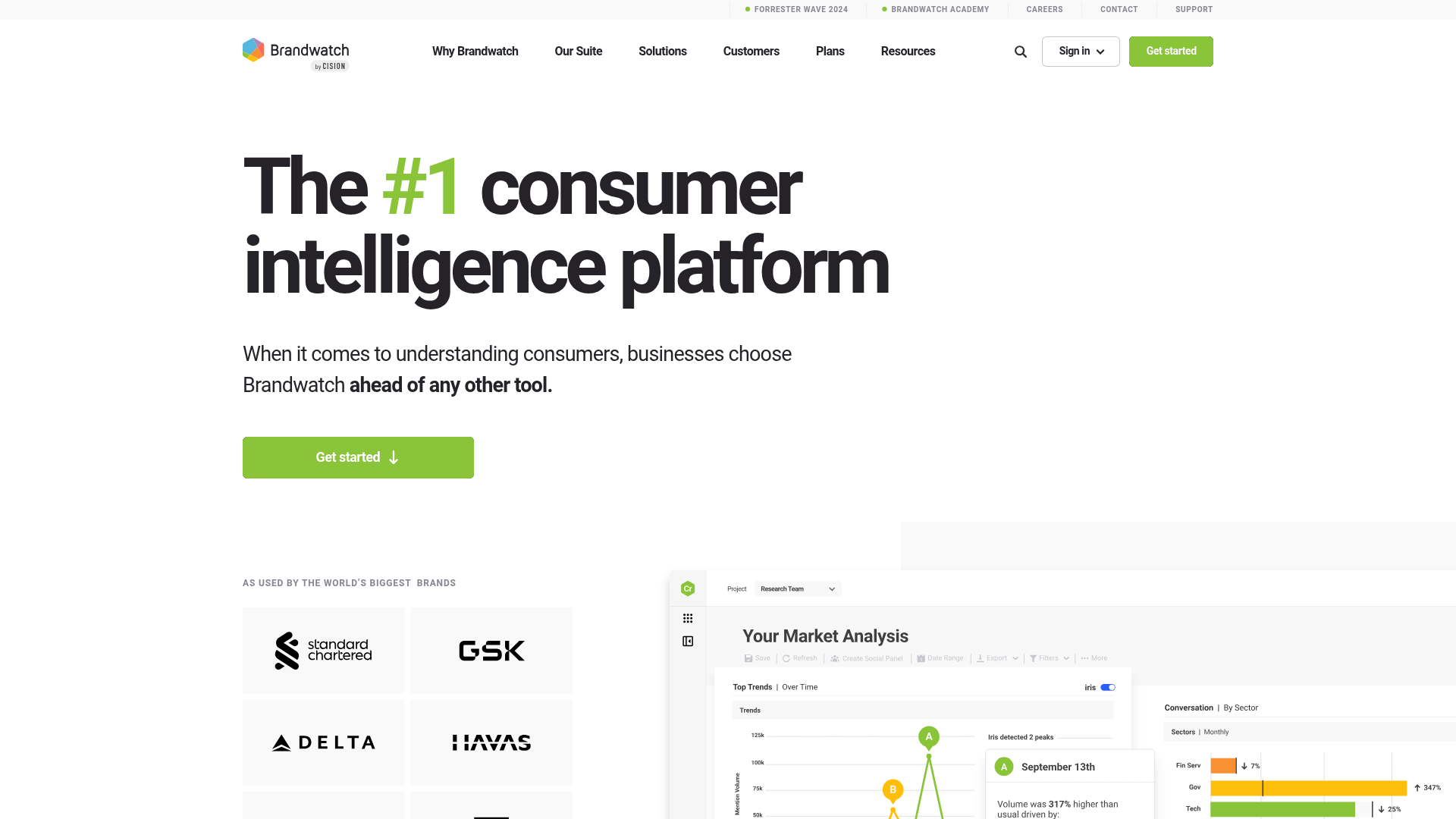
Brandwatch's Consumer Intelligence product ingests the full volume of public social and forum mentions, not a sample, and layers AI sentiment and image recognition on top so a brand or comms team can see how a market or a set of named brands is discussed over time. It carries the largest review sample of any tool in this comparison: 4.4 out of 5 from 728 reviews on G2. Reported average annual contracts sit around $50,000, ranging roughly $19,500 to $81,000.
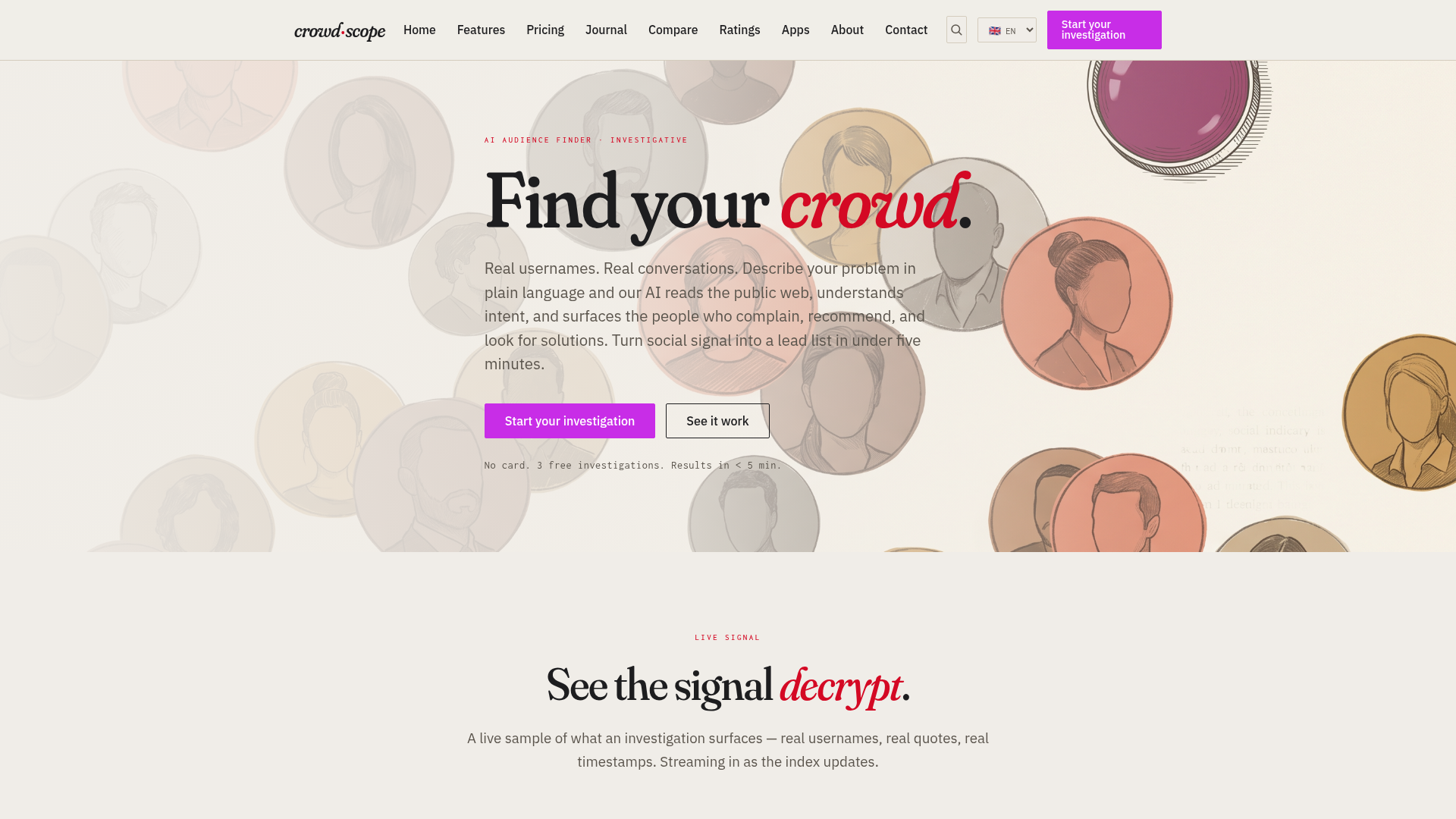
Crowd Scope starts from the opposite direction. Instead of asking what is said about a named brand, it asks who is describing a problem, by name, whether or not they have ever mentioned a competitor. A query like "product managers complaining about Notion search, last 30 days" runs across 8 platforms, Reddit, X, LinkedIn, and Discord included, and returns a named account, an exact quote, a source URL, and a timestamp for each result. The company's own site cites 412 million public posts indexed and a 4.2-minute median time from query to first lead, figures we have not independently audited and are citing as the vendor's own claim, not a verified benchmark.
Pricing reflects the different model. Crowd Scope's free Notebook tier runs 3 investigations a month; Field Kit starts at $49/month with Clay, Apollo, HubSpot, and Notion integrations built in. No sales call required for either. Brandwatch requires one for every tier.
Who should actually reach for Crowd Scope here
Marcus leads growth at a seed-stage devtools startup with no named competitors yet worth tracking, because the market is still forming. What he needs is not a battlecard. It is a list of the 40 or so people on Reddit and X who spent the last 30 days complaining about the exact gap his product fills. That is a Crowd Scope query, not a Klue or Brandwatch subscription, because neither of those tools is built to surface an unnamed person who has never typed a competitor's name.
If the actual question is "what is Competitor X doing this quarter," Crowd Scope will not answer it, and we would rather say that directly than stretch the product to fit a job it was not built for.
What we did not measure
We did not run all 6 tools through an identical multi-week workflow test the way Crowd Scope does for full single-product reviews. This is a structured first-pass comparison built from public pricing pages, product documentation, and G2's review aggregates, not a hands-on trial of every enterprise contract tier. Klue, Crayon, Contify, and Brandwatch are sold through a sales demo, which means real pricing and feature access for a specific team's use case can only be confirmed by actually going through that process.
Automated battlecards for named competitors
Continuous tracking of a fixed list of rivals: pricing pages, feature launches, and review sentiment, rolled into shareable battlecards for sales.
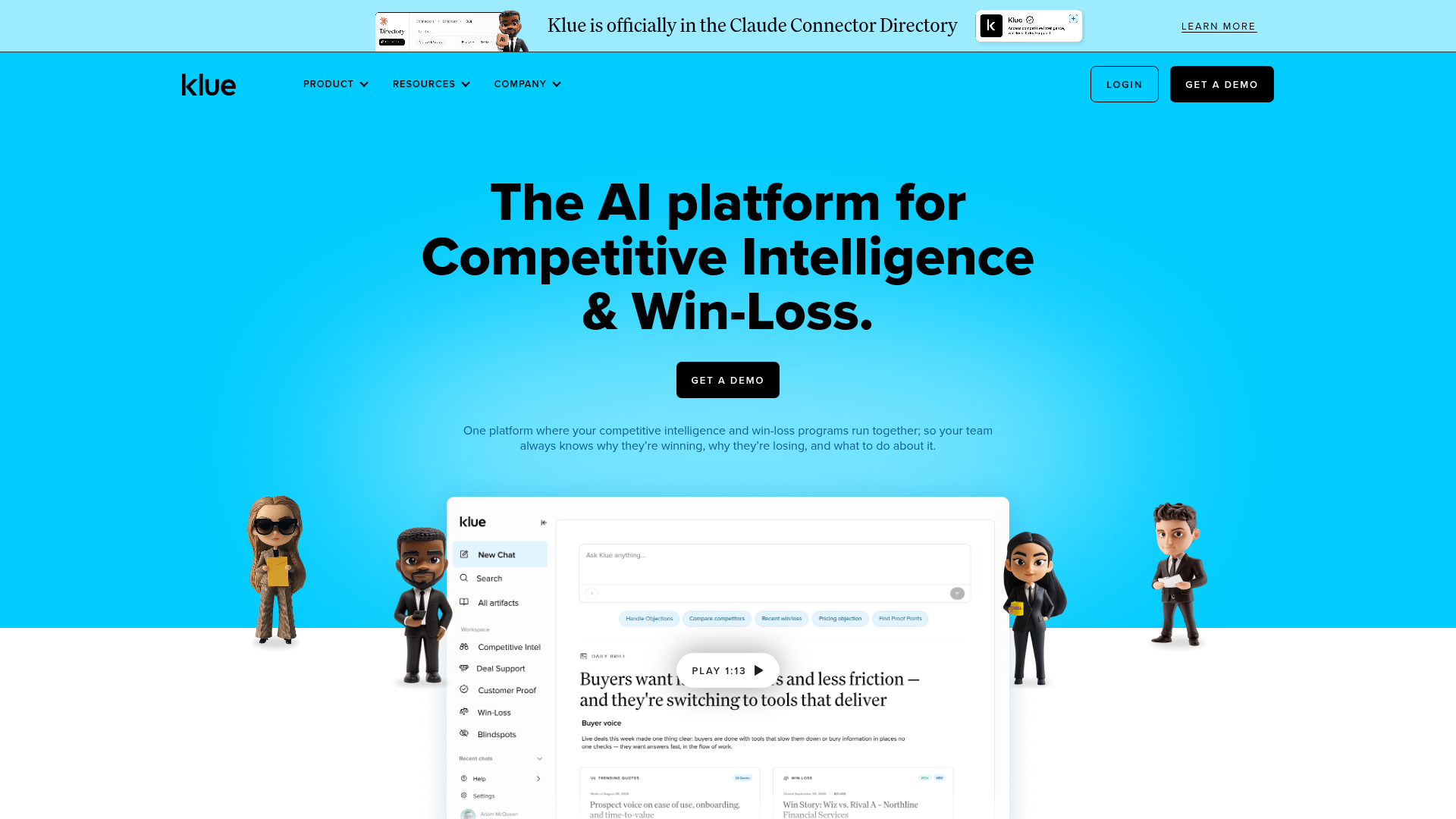
Klue
- G2 aggregates 4.7 out of 5 from 443 reviews, the strongest independent review signal of the 6 tools compared here
- Battlecards embed directly inside Salesforce, Slack, and a browser extension, so reps see them at the point of a live call
- Named a Leader in the 2026 Gartner Magic Quadrant for competitive enablement, and ranked number 1 for revenue enablement in the companion report
- No published starting price; customer reports put annual contracts between roughly $16,000 and $30,000, gated behind a sales demo
- Built for a sales team large enough to actually run a battlecard rotation, overkill for a single founder still validating a market
The strongest verified review signal in this comparison, but it assumes a sales team already running deals against named rivals.
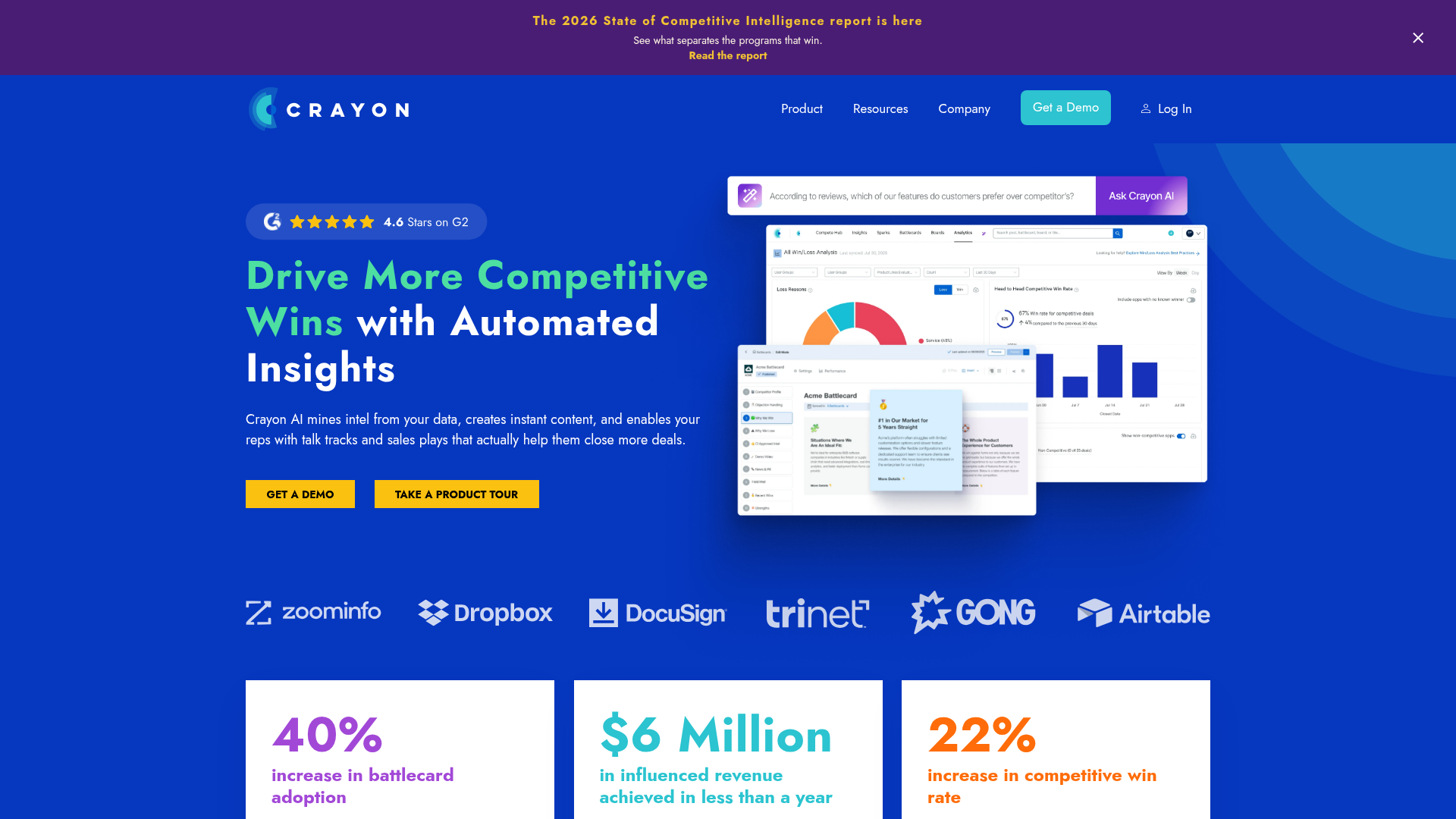
Crayon
- G2 rates it 4.6 out of 5 across 385 reviews, the second-strongest independent signal in this comparison
- Tracks named competitors' websites, pricing pages, job postings, and G2/Capterra sentiment automatically, with change alerts
- Slack and CRM integrations route competitive alerts straight to reps without a separate login
- No self-serve pricing; customer reports put contracts from roughly $25,000 to over $100,000 per year depending on scale
- Built around a fixed list of 2 to 4 named competitors, not open-ended discovery of unnamed prospects or emerging rivals
Close behind Klue on review signal, with a slightly wider feature set for teams that already know exactly who they are watching.
Kompyte
- G2 rates it 4.3 out of 5 across 102 reviews, with users specifically praising fast data retrieval on tracked competitor pages
- Now bundled inside Semrush, so a team already paying for Semrush SEO or content tooling adds competitor tracking without a second vendor
- Automated change detection on competitor pricing and copy, plus a Chrome extension for quick manual capture
- No longer sold as a standalone product since the 2022 Semrush acquisition, so cost depends entirely on which Semrush tier is needed
- Weaker as a first purchase if the team is not already inside the Semrush ecosystem for SEO or content
The cheapest path to battlecard-style tracking, but only if Semrush is already part of the stack.
Curated market and news intelligence
Broader signal across news, filings, and job boards for a research or strategy team, not just a handful of named rivals.
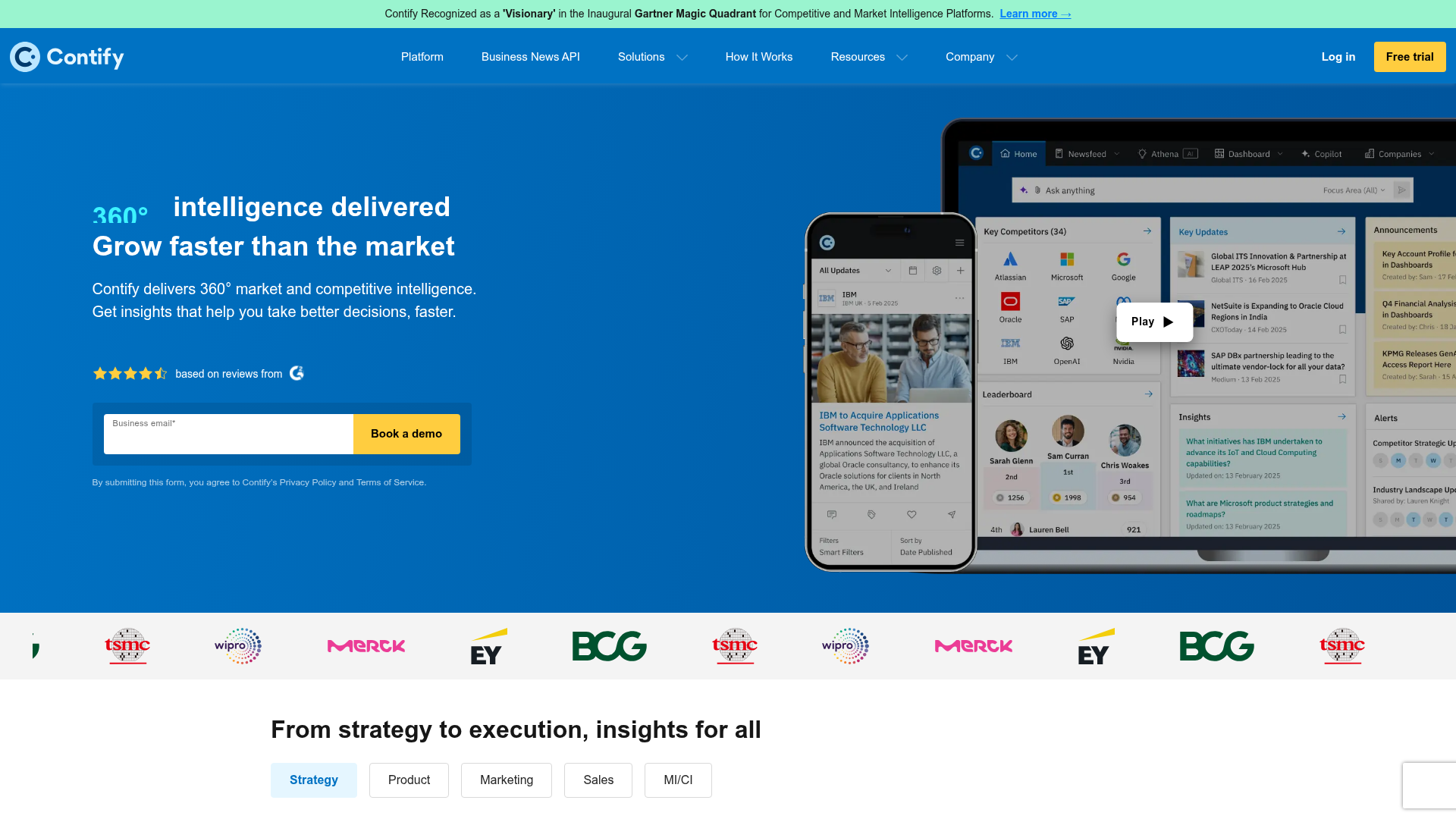
Contify
- G2 rates it 4.5 out of 5 across roughly 115 reviews, competitive with the dedicated battlecard tools in this comparison
- Curates signals from more than 1 million sources, including news, filings, and job boards, not just a handful of named competitor pages
- AI-generated daily or weekly digest briefs cut the manual reading time for a research or strategy team
- Custom enterprise pricing only, sold through a sales demo, with no published starting figure anywhere
- Built for ongoing industry-level monitoring over months, more coverage than a founder validating one specific idea usually needs
Best suited to a research-grade brief, not a quick check on 2 or 3 named rivals.
Public-signal and audience intelligence
Listening to what is said in public: at brand scale with Brandwatch, or at the level of one unnamed person describing a problem with Crowd Scope.
Brandwatch
- G2 rates the Consumer Intelligence product 4.4 out of 5 across 728 reviews, the largest review sample in this comparison by a wide margin
- Ingests the full volume of public social and forum mentions rather than a sample, with AI sentiment and image recognition layered on top
- Persona and audience analysis shows who is talking about a market, not just a sentiment score attached to a keyword
- Reported average annual contract sits around $50,000, with deals observed between roughly $19,500 and $81,000
- Built to monitor what is said about brands that are already named in the conversation, not to surface unnamed people who never mention a rival
The most complete public-listening dataset here, but it answers a brand-monitoring question, not a prospecting one.
Crowd Scope
- Every result carries a named account, an exact quote, a source URL, and a timestamp, not an aggregated sentiment score
- A paid plan starts at $49/month for 50 investigations across 8 platforms, versus a sales demo and a five or six-figure contract for the other 5 tools here
- Clay, Apollo, HubSpot, and Notion integrations push results straight into an existing outbound workflow instead of a separate dashboard
- No independent G2 or Capterra review aggregate yet; the product is too new to verify at the scale the other 5 tools in this comparison have
- Does not track named competitors' pricing, features, or job postings; it will not replace a battlecard tool for a sales team
Not a competitive intelligence tool in the battlecard sense. It is the other half of the same job: finding the people, not watching the rivals.
Verdict
Klue and Crayon win on independent review signal (4.7/5 from 443 reviews and 4.6/5 from 385 reviews on G2) for teams that need battlecards on a fixed list of named competitors. Contify and Kompyte cover broader or cheaper ground. Brandwatch and Crowd Scope both read public conversation, but Brandwatch tracks what is said about named brands, while Crowd Scope finds unnamed people describing your problem before they ever mention a rival.
How we tested
We pulled pricing, features, and G2 review data directly from each vendor's own site and G2's public product pages between August 25 and August 29, 2026. Where a vendor does not publish pricing, we cite third-party customer reports of actual contract ranges instead of inventing a figure. Crowd Scope's pricing came from its own published pricing page, since it is a self-serve product with no sales-gated tiers. We did not run every tool through an identical multi-week workflow test the way Crowd Scope does for full product reviews, so treat this as a structured first-pass comparison, not a verdict on your specific stack. Where a review score was not independently verifiable, we said so instead of guessing.