How to Write a Press Release Reporters Actually Open
Summary
To write a press release, lead with the news in one sentence, add one named quote and one measured number, then finish with a boilerplate and a reachable contact. Keep it to one page, about 300 to 450 words. Find the angle by reading the conversations your buyers already have, pitch reporters by what they wrote recently, and track pickups, backlinks and leads for 30 days.
Here is how to write a press release that gets read: open with the news in one sentence (who, what, when, why it matters), add one quote and one hard number, then close with a boilerplate and a named contact. Keep it to one page, roughly 300 to 450 words. A press release is a short document for journalists, not a brochure, so every line must help a reporter decide in ten seconds whether the story is theirs.
Most releases fail before the first word is typed. The news was never news.
Is what you are announcing actually news?
Run this test before you open a document. Would a stranger who has never heard of you care that this happened? If the answer is "only our customers", you have a product update, not a press release.
Real news tends to fall into a few buckets: funding, a launch with a concrete first, original data, a partnership with a named company, a senior hire, or a position on something the industry is arguing about. A new button in your dashboard is none of those.
Original data is the bucket most B2B teams skip, and it is the one reporters ask for. Prezly's guide notes that almost two in five journalists want to be pitched exclusive research, which matches what we see on the founder side: a number nobody else has beats a quote nobody needs.
Skip the release entirely if your only angle is "we are excited to announce". Excitement is not an angle.
How do you find the angle reporters will pick up?
Start from the conversation your reader is already having, not from your roadmap. Read the threads where your buyers describe the problem in their own words. Note the phrases that repeat, the numbers they quote, the tool they say is failing them.
That is the investigative step, and it is the one that separates a release from a rewrite of your homepage. At Crowd Scope we call it the signal pass: before drafting, collect named posts, dates and URLs from Reddit, X, LinkedIn and Hacker News about the problem you solve.
Take Olivia, a PMM at a Series A workflow SaaS. She is about to announce an integration. Her draft angle is "seamless connection with X".
She spends one morning reading threads and finds the same complaint in a pile of posts: teams copy data between two tools by hand every Monday. New angle: "The Monday copy-paste job ends today". Same product, a story a reporter can picture.
Write down three candidate angles, then pick the one with a number attached. If you cannot attach a number, you do not have an angle yet.
What goes in the headline and the first paragraph?
The headline carries the news, not the brand. Keep it under 70 characters, skip the exclamation marks, skip the all caps, and put the verb early. "Acme raises $8M to end manual data entry" works. "Acme Announces Exciting New Milestone" does not.
The first paragraph is the lede. It answers who, what, when, where and why in two sentences. If a journalist reads only that paragraph, they must still be able to report the story.
A working lede has four parts:
Who: the company, with a short descriptor ("a Ghent-based analytics startup")
What: the news, in plain verbs
Proof: one number with a unit and a time window
Why now: the reason this matters this quarter
Put the dateline (city and date) in front of it. Leave the adjectives out.
How long should it be, and what does the body contain?
One page. Semrush suggests a body of about 400 words, and our own rule is simpler: stop when the next sentence does not change what a reporter would write.
After the lede, the body does three jobs. It gives context (two or three sentences), it gives evidence (the data, the customer result, the method), and it gives a quote.
Keep paragraphs to three sentences. Reporters skim, and a wall of text reads like marketing copy.

What makes a quote worth printing?
Most quotes are filler: "We are thrilled to partner with..." No reporter will use that, because it says nothing.
A usable quote does one of three things. It gives an opinion ("Manual reporting is a tax on every growth team"), it explains a decision ("We built it in the open because..."), or it gives a number in a human voice. Attribute it to a named person with a title, never to "a spokesperson".
Write the quote last, then read it aloud. If you would not say it to a friend, rewrite it.
What are the closing blocks: boilerplate, contact, media?
End the release with a boilerplate, a 50-word description of the company with one proof point (customers, countries, founding year). It stays almost identical across every release, so write it once and reuse it.
Add a named contact with an email and a phone number. A release without a reachable human loses coverage. Reporters on deadline will not hunt for you.
Link to your assets instead of attaching them. Large attachments get blocked by spam filters, and a hosted newsroom page is indexable. Put a logo, two photos and any chart in a folder that opens without a login.
Finish with "###" or "-ENDS-" so the editor knows nothing is missing.
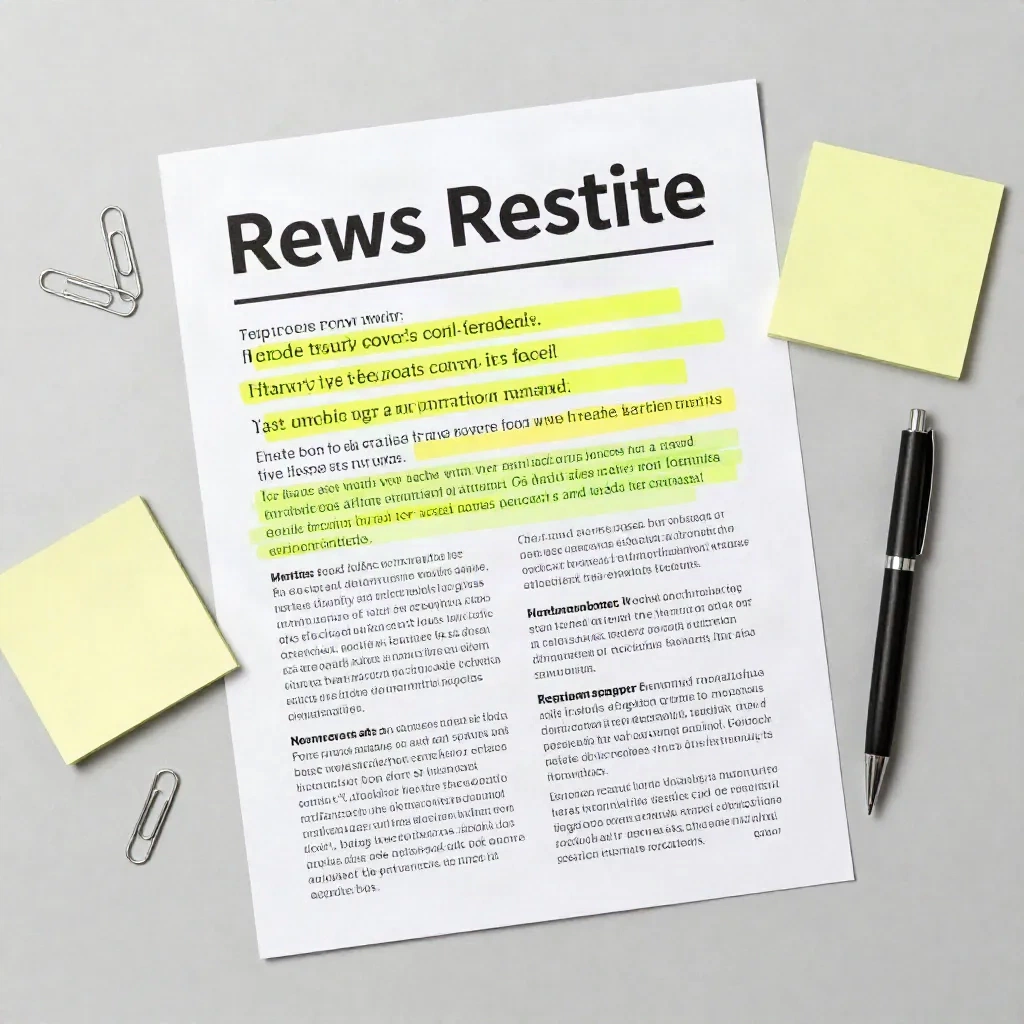
What does a press release look like on the page?
Here is a skeleton you can copy. Replace every bracket, and delete any line you cannot fill with a fact.
Label: FOR IMMEDIATE RELEASE (or EMBARGOED UNTIL [date, time, time zone])
Headline: [Company] [verb] [news] (under 70 characters)
Dateline and lede: [City], [date]. [Who] [did what], [number + unit + time window], [why it matters now].
Context: two or three sentences on the problem, in your buyer's words.
Evidence: the data, the method, the customer result.
Quote: one named person, one opinion or decision.
Availability: where to get it, what it costs, when.
Boilerplate: 50 words, one proof point.
Contact: name, email, phone.
Print it and read the first 30 words only. If the news is not obvious, the headline is wrong.
Which mistakes kill a release fastest?
Four patterns account for most of the silence. They are easy to spot once you have read a few hundred pitches.
A non-story dressed as news. A rebrand, a new office, a minor feature. Nobody outside your company cares.
A buried lede. Three paragraphs of company history before the news.
Jargon and superlatives. "Industry-leading" and "cutting-edge" tell a reporter nothing they can verify.
No contact, or the wrong one. The press contact is on holiday, and the reporter moves to the next email.
Add a fifth for B2B teams: a release with no number. Tie every claim to a count, a unit and a window, such as "412 users in 30 days". If you did not measure it, say so or leave it out.
Which tools help, and which ones are overkill?
You need three things: a place to draft, a list of the right journalists, and a way to see what happens after you send.
For the list, a media database such as Muck Rack or Prowly lets you filter reporters by beat and recent articles.
For the newsroom page and distribution, Prowly also handles press pages, which is useful when you want search engines to index your releases.
For the research step, the one most teams skip, you want names and URLs, not sentiment charts. Brandwatch and similar tools tell you whether people mention your brand. They do not tell you who is describing the problem you solve, which is what an angle needs.
If you then want to turn those threads into a contactable list (founders, PMMs, analysts who care about your topic), an enrichment tool like Clay handles the lookup and export.
Skip wire services unless you need compliance distribution or you are a listed company. A wire gets your release onto partner sites. It does not get a reporter to read it.
How do you send it without landing in spam?
Send a short pitch email, not the release as an attachment. Paste the release below your pitch, three sentences on top: why this reporter, what is new, what you can offer (data, an interview, a customer).
Pick the reporter by what they wrote in the last 60 days. Reference one specific article. Mass blasts to a bought list produce syndicated copies, not stories.
Time it. If the news is not under embargo, send on a Tuesday or Wednesday morning in the reporter's time zone. If you offer an embargo, put the lift time in the subject line and honour it.
Follow up once, two working days later, with something new: a data point, a quote, an image. "Just checking in" earns a delete.
What should you do after publishing?
Track four things for 30 days: pickups, backlinks, referral traffic and new leads. That is the only way to know which angle worked.
Keep a log of every reporter reply, including rejections. A "not for us, but send me X" is the cheapest briefing you will ever get.
Then repeat the signal pass. The same threads you read before drafting tell you, a month later, whether the conversation moved.
Should you hire an agency or write it yourself?
Write it yourself when you have a clear number and a narrow audience. You know the product, and a release is 400 words.
Hire help when you need relationships: a funding round, a crisis, a launch where you need ten reporters to take the call. The agency is paying for access, not for grammar. If you stop the retainer, those relationships stay with them.
Either way, you own the angle. Nobody outside your company can read the threads for you.